Module

One plan with your partner, kept honest by its scorecard

A joint business plan is a contract with a scorecard. RevUpra keeps it as one: agreed with the partner, turned into the agreements and funding it commits, and measured every period against what was promised.

The same problem, stated twice

Once for the person who owns the P&L, once for the person who owns the systems. Neither column is a summary of the other.

The financial problem

The plan was agreed in a deck. Nobody kept score.

  • Objectives are agreed at the annual review and not looked at again until the next one.
  • What the plan commits — funding, listings, displays — is keyed into other systems by hand, or never.
  • Each side keeps its own version, so the review starts with an argument about which one was agreed.
  • Next year’s plan starts from a blank template instead of this year’s results.

The technical problem

A plan in a slide deck cannot generate anything.

  • Targets live in a presentation, so no system can measure actuals against them period by period.
  • The plan’s commitments are not records, so nothing reconciles what was promised with what was paid.
  • Versions travel by e-mail between the two companies, with no way to show both agreed the same one.
  • Partner-reported figures — distribution points, availability, compliance — arrive in spreadsheets nobody loads.

What RevUpra does

Inside joint business planning

1

Plan

The facts of the last cycle

Start from what actually happened with this partner, not from a blank page.

Objectives with a target per period

Revenue, units, distribution or any measure you agree — each weighted, with a target for every period of the plan.

Who funds and does what

Commitments for each side within each side’s envelope, with the initiatives and the promotions on the plan’s calendar.

2

Agree

Approved, then agreed

The plan goes through your own approval before it is agreed, and is signed off with the partner.

Generate what it commits

An agreed plan’s commitments become the agreements and account funding they call for, each through its own module’s rules.

Supplier funding passed through

A commitment a supplier funds on your plan with it can be passed on to a customer on your plan with them — with what came in, what went out and your own share.

3

Score & review

A scorecard that keeps itself

Every objective against its targets, period by period, beside what was committed, earned, claimed and settled.

Reviews and the next cycle

Quarterly and annual reviews freeze the scorecard with its gaps, lessons and actions; next year’s plan is made from this one.

A review drafted for you

The Promotion Advisor drafts the review from the scorecard. The figures stay RevUpra’s, and nothing changes without a person.

4

With your partner

Partners who also use RevUpra

Connect with a trading partner that runs RevUpra; each company keeps its own data. Plan together, share actuals and reviews, and claim the funding each side committed.

Partners who do not

Send the plan as a workbook. What comes back is a counter-proposal to compare, accept or reject, and their KPI figures arrive as an upload.

Promotions shared both ways

Send a connected partner your promotion calendar, the deal sheet for what it funds and the results — on its own plan, in its own system.

Watch

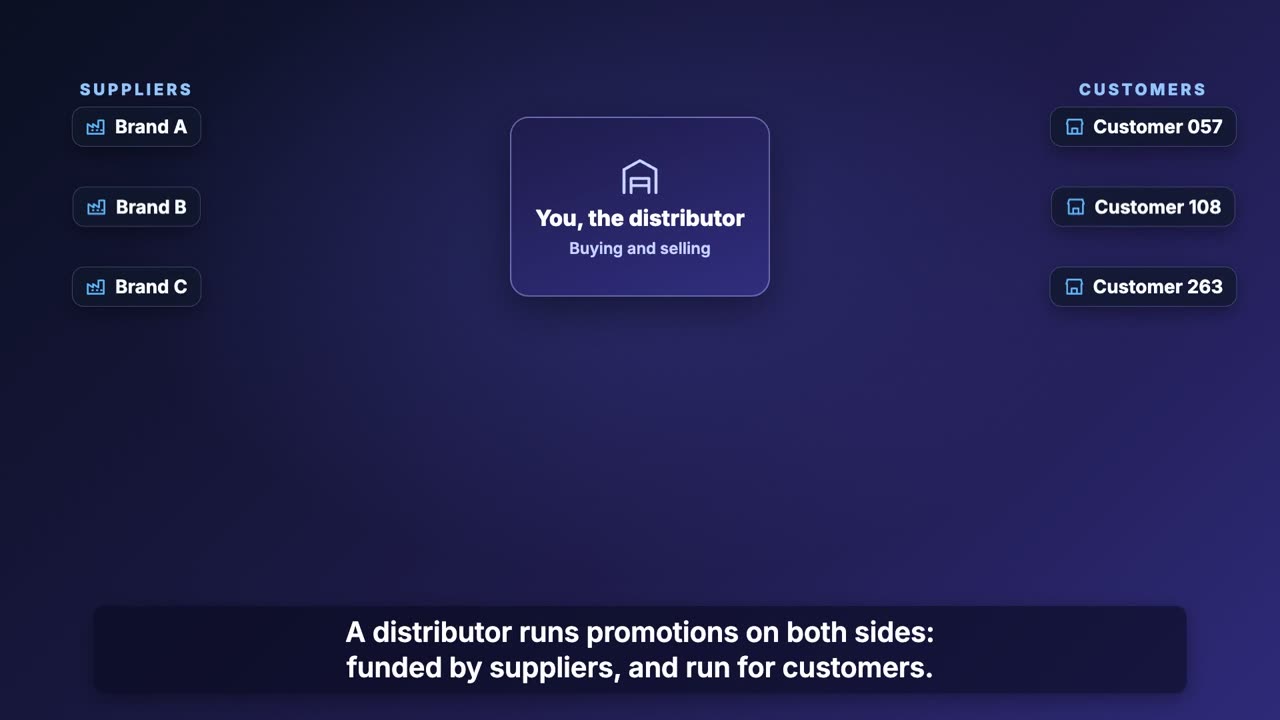
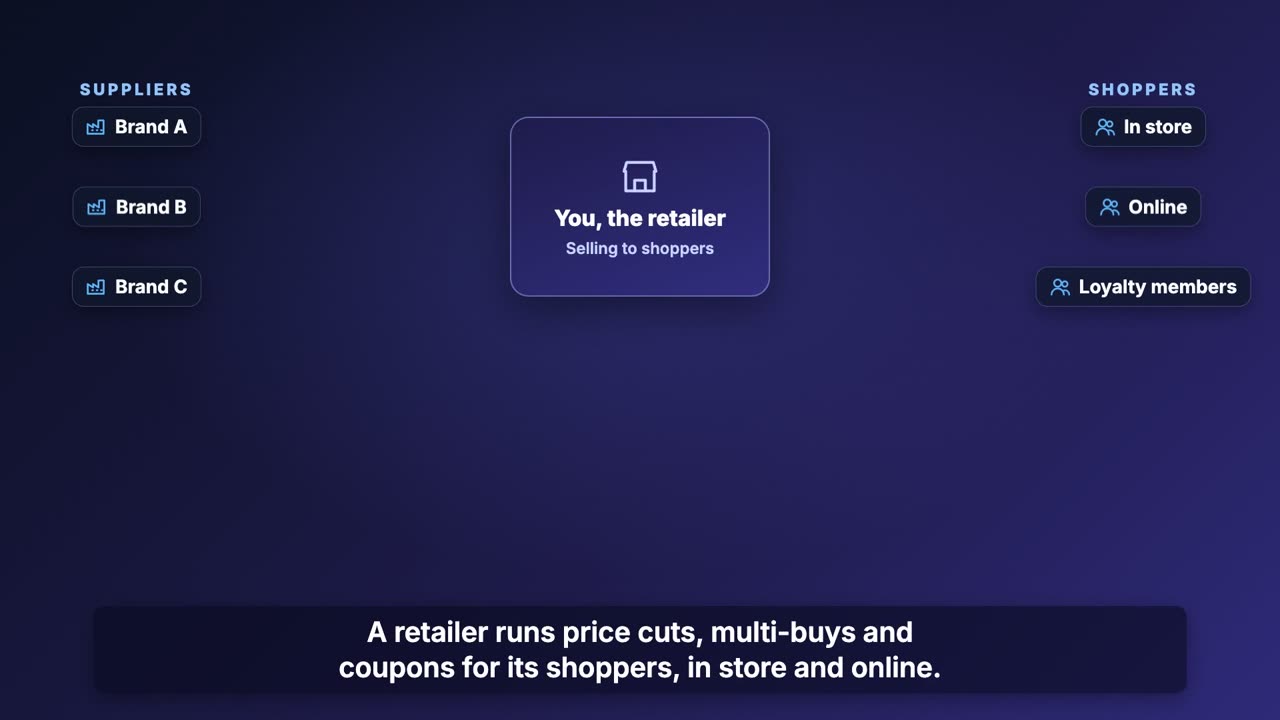
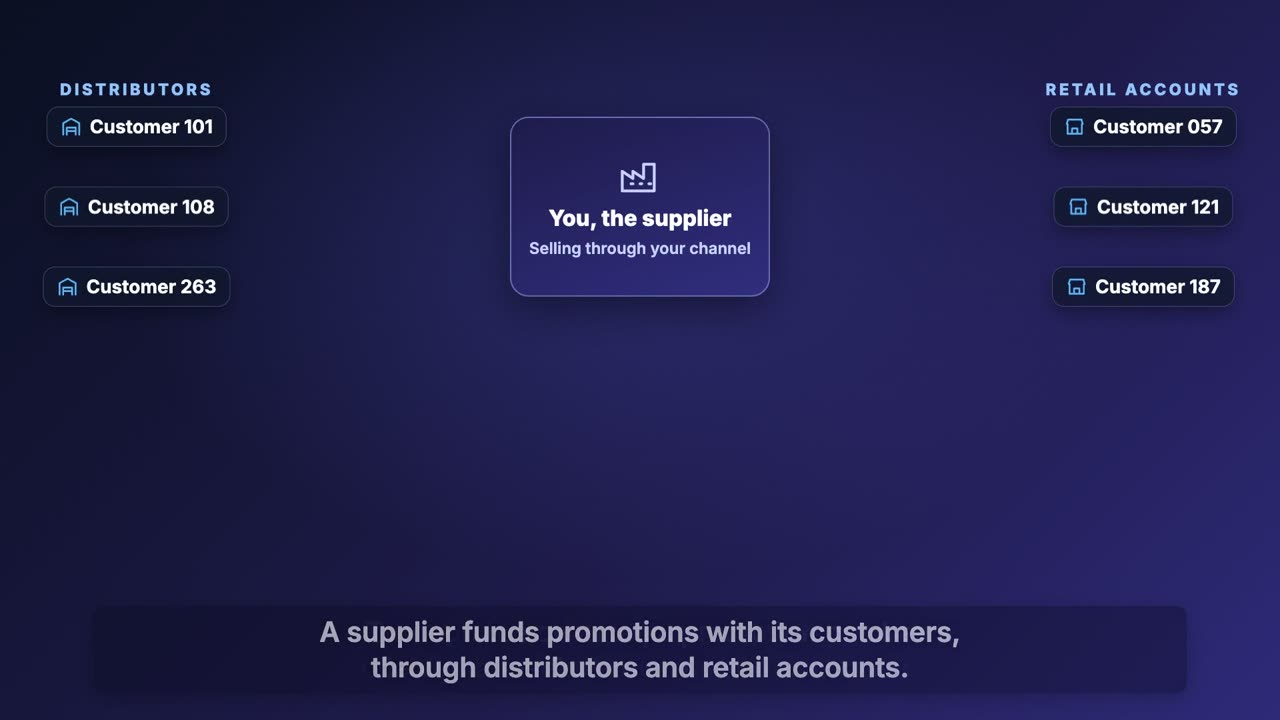
Promotions with your partners, in a minute

The same capability seen from each seat — a distributor, a retailer and a supplier.

More on the RevUpra YouTube channel.

Benchmarks

What good looks like

Use this as a self-assessment. If you cannot produce one of these numbers for your own program, that is itself the finding.

Joint business planning benchmarks
Metric Typical today Target
Objectives measured against their targets At the annual review Every period
Plan commitments that exist as records Few, keyed by hand Every one, generated from the plan
Agreement on which version was signed Argued at the review Checked before approval
Next cycle’s starting point A blank template This cycle’s results
Ranges are indicative benchmarks drawn from published channel-incentive and pricing research together with our own implementation experience. They vary widely by program complexity, channel depth and data quality — treat them as the opening question in a diagnostic, not a guarantee.

A plan earns its keep when the review is about what to do next — not about which version was agreed, or what actually happened.

Leak points

What this closes

The leak points from our taxonomy that this module addresses directly.

02

Contract drift

“You are operating a version of the deal nobody signed.”

Financially

The signed agreement says one rate; the system was configured with another, or an amendment was agreed by email and never applied. Every transaction from that point is priced or accrued wrongly, and the exposure compounds silently until renewal.

Technically

The contract is a document and the configuration is data, and nothing binds them. Amendments arrive as redlined attachments; applying them to the running configuration is a manual re-keying step with no verification.

Typical cost
0.5% – 2.0% of contracted revenue
Benchmark
Best practice is zero drift — every executed term traceable to the clause that created it.

How it closes: The contract is the front door. Terms are mashed live from the deal, redlined with attribution, executed, and the executed version is what the engine runs.

See the module →
04

Unclaimed entitlement

“The threshold was crossed. Nobody raised the claim.”

Financially

Volume crossed a tier, a growth kicker or a lump-sum threshold and nobody raised the claim before the agreement window closed. It runs in both directions. Buy-side it is pure margin — earned from a supplier, never invoiced, quietly written off at year end. Sell-side it is the mirror image: an entitlement a customer earned that was never accrued, which returns months later as a retrospective claim settled in full because nobody can still prove what was actually due.

Technically

The agreement terms live in a PDF in a shared drive, not in a system that can evaluate them against the transactions that earn them — purchases on the buy side, sell-through on the sell side. There is no engine watching the threshold, so no event fires when it is crossed. Discovery depends on a person remembering.

Typical cost
0.3% – 1.1% of purchase spend
Benchmark
Best-in-class recover >98% of earned entitlement within one claim cycle.

How it closes: Agreement terms become executable rules on both sides of the trade. The accrual engine evaluates them nightly against real transactions and raises the claim — or the liability — itself.

See the module →
05

Promotion & MDF spend leakage

“The fund was spent. The proof was not collected.”

Financially

Market-development funds are committed against a promotion, drawn down and paid, but the deliverable evidence is thin or missing. Unsupported spend is not recoverable from the vendor and, when audited, is often clawed back.

Technically

Promotions are run in email and spreadsheets: the budget lives in one file, the vendor commitments in another, the proof-of-performance in a folder. There is no object linking money to evidence, so the link is reconstructed manually or not at all.

Typical cost
8% – 20% of MDF & co-op spend
Benchmark
Well-governed programs carry proof-of-performance on >95% of drawn funds.

How it closes: Budget, CAP, vendor commitment, deliverable and claim are one linked object. Funds cannot be drawn past CAP, and evidence is attached to the money.

See the module →

See what RevUpra can recover for you.

Thirty minutes, tailored to your programs. We walk an agreement through modeling, contracting, accrual, claim and settlement using examples close to your own — and model an indicative ROI against your volumes.